 508 Makomo Extension, Epworth, Harare.
 Tuition
 +263 77 710 7026
Academics
Curriculum Overview • Early Childhood Development • Lower Primary • Upper Primary • Specialist Programs
Curriculum Overview
Riverstone Primary delivers the Zimbabwe School Examinations Council (ZIMSEC) curriculum across all primary learning areas. Our schemes of work, lessons, and assessments are mapped directly to ZIMSEC syllabi and performance standards to ensure national compliance and strong foundations in Languages, Mathematics, Science and Technology, Social Studies/Heritage Studies, Agriculture, Visual and Performing Arts, Physical Education, ICT, and Family, Religion and Moral Education. Teaching emphasizes the competencies and command words defined by ZIMSEC so that learners build accurate subject mastery and confidence.
Assessment is continuous and aligned to ZIMSEC expectations, combining classwork, practical activities, projects, and termly tests with ZIMSEC‑style items and marking approaches. Pupils engage with past‑paper formats, structured questions, and practical tasks that mirror ZIMSEC objectives, while teachers use rubrics and moderation to ensure reliable grading. Learning support and enrichment pathways help every child progress at the right pace, with targeted interventions for gaps and extension tasks for high achievers.
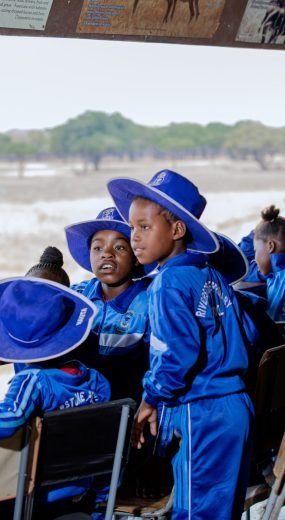
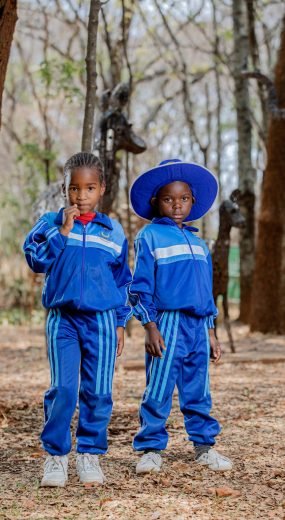
Early Childhood Development (Building Strong Foundations Through Play and Discovery)
The early years of education are critical. Research shows that the experiences children have in their first years of school shape their attitudes toward learning, their social-emotional development, and their future academic success. At Riverstone, our Early Years program provides a warm, nurturing, and developmentally appropriate environment where our youngest learners can thrive.
We introduce literacy in engaging, age-appropriate ways that build a strong foundation for reading and writing. Through daily read-alouds, shared reading experiences, phonics instruction, and opportunities for emergent writing, we help children develop phonemic awareness, letter recognition, vocabulary, and comprehension skills. Most importantly, we foster a love of books and stories that will serve them throughout their lives.
Lower Primary (Developing Foundational Skills and Confident Learners)
The Lower Primary years are a time of tremendous growth and development. During Grades 1-3, students transition from learning to read to reading to learn. They develop fluency in foundational academic skills while beginning to apply those skills in increasingly complex and meaningful ways. Our comprehensive literacy program focuses on developing strong readers, writers, and communicators. Through a balanced approach that includes phonics instruction, guided reading, independent reading, writing workshop, and explicit instruction in comprehension strategies, we help students develop the skills and confidence they need to engage with increasingly complex texts.
We also emphasize the joy of reading, providing students with access to a rich classroom library and regular opportunities to choose books that match their interests. Throughout Lower Primary, students engage in project-based learning experiences that allow them to apply their skills in meaningful, authentic contexts. These projects often integrate multiple subject areas and culminate in presentations or products that students share with their classmates, families, or the broader community. As students progress through Lower Primary, we gradually increase expectations for independence and responsibility.
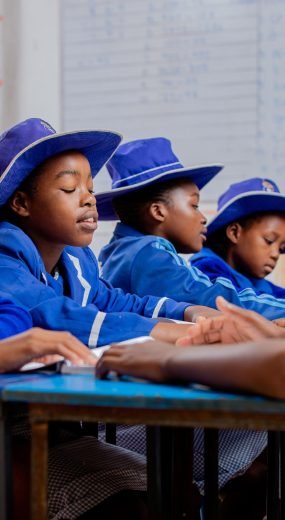
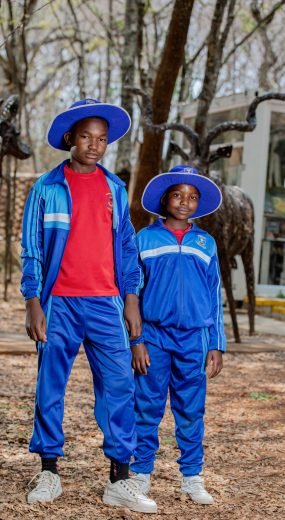
Upper Primary (Fostering Independence, Critical Thinking, and Leadership)
The Upper Primary years represent a critical transition period. Students in Grades 4-6 are developing greater independence, more sophisticated thinking skills, and a stronger sense of identity. Our Upper Primary program is designed to meet students where they are developmentally while challenging them to reach new heights academically, socially, and personally.
The curriculum in Upper Primary becomes more rigorous and complex. In literacy, students engage with increasingly sophisticated texts, analyze author’s craft, develop persuasive and analytical writing skills, and participate in literature discussions that require higher-order thinking. In mathematics, students work with fractions, decimals, percentages, algebraic thinking, and complex problem-solving. Science and social studies units require more independent research, critical analysis of sources, and synthesis of information.
Specialist Programs That Ignite Passion and Talent
At Riverstone Primary, we believe that a truly excellent education extends far beyond reading, writing, and arithmetic. While we maintain high standards in core academic subjects, we also recognize the critical importance of providing students with rich experiences in STEM, the arts, music, and physical education. These specialist subjects are not “extras”—they are essential components of a well-rounded education that develops creativity, critical thinking, collaboration, and physical well-being. Our dedicated STEM program provides students with hands-on, minds-on experiences that develop problem-solving skills, computational thinking, and innovation.
Our visual arts program provides students with opportunities to explore, create, and express themselves through a wide variety of media and techniques. Beyond developing technical skills, our arts program teaches students to observe carefully, think creatively, take risks, and develop their unique artistic voice. Our dynamic PE program promotes physical fitness, motor skill development, sportsmanship, and lifelong healthy habits. These specialist programs do more than provide a break from academic work—they enhance and support learning across all areas.
